1 March – 31 October, daily 10:00 AM – 6:00 PM
69th Annual Exhibition 2025
EMIL NOLDE –
"HUMAN BEING AND ARTIST" IN BERLIN
EMIL NOLDE – "HUMAN BEING AND ARTIST" IN BERLIN
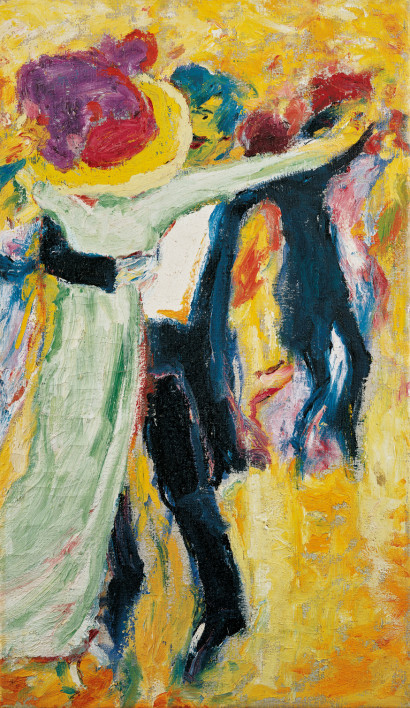
Emil Nolde, "Dance II", painting 1911
© Nolde Stiftung Seebüll

About the exhibition

The 69th Annual Exhibition of the Nolde Foundation Seebüll in 2025 was dedicated to Emil Nolde’s understanding of city and countryside. This alternation was central to his life: the artist spent his summers mostly in rural seclusion and his winters in the hustle and bustle of the capital, Berlin. The vivid depictions of Berlin’s nightlife with dance, theatre and cabaret were juxtaposed with enchanting animal watercolours from the Berlin Zoo. In total, more than 110 works presented the full scope of Nolde’s art, including his renowned flower paintings, dynamic seascapes and expansive landscapes.

The prominent Expressionist Emil Nolde (1867–1956) divided his life between city and countryside — between his summer residence in what is now the German–Danish border region and a studio apartment in Berlin during the winter months. In these two very different worlds, he found inspiration for his art: on the one hand in his remote homeland, and on the other in the vibrant metropolis. The Nolde couple spent the winters in Berlin, renting a studio apartment on Tauentzienstraße from 1910 and later on Bayernallee in the Westend district from 1929.

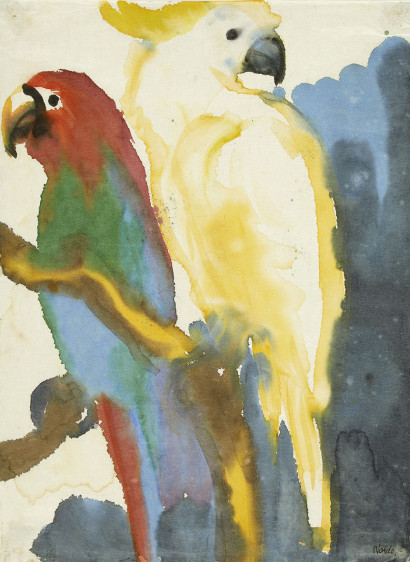
Two colourful parrots on branches – the left one red, green and blue, the right one white and yellow – set against a light yellow-blue background.
Emil Nolde, Two Parrots, watercolour 1923/24
© Nolde Stiftung Seebüll
Park landscape with a fountain in the foreground, steps leading up to a large yellow-orange building with a green roof, surrounded by green lawns, bushes and trees.
Emil Nolde, Sanssouci, watercolour
© Nolde Stiftung Seebüll

At the beginning of the 20th century, artists were magnetically drawn to one of Europe’s most important metropolises. Berlin’s nightlife, with its dance, theatre and cabaret scene, also became a significant source of inspiration for Emil Nolde. Particularly in the years 1910/11, he explored the big city in his paintings. Max Reinhardt, director of the Deutsches Theater and the Kammerspiele, provided Nolde with complimentary tickets. In the dark auditorium, assisted by Ada, Nolde created a series of well over 300 watercolours and ink drawings with quick, precise brushstrokes, focusing on the expressive potential of the figures, their movements and dances, their gestures and stage presence. In his lively watercolours and radiant oil paintings, Nolde paid tribute to the dynamic energy of the metropolis.

At the same time, life in Berlin enabled him to maintain direct contact with friends, collectors, art historians, museum directors and gallery owners. For the ambitious artist — supported by his socially adept wife Ada — the city was an important place for networking. He often referred to himself as a “painter person”, thereby emphasising the distinction between the artist and the individual, which was central to his self-conception.

Plan Your Visit To Seebüll

Plan Your Visit To Seebüll

Whether ticket purchase, arrival, parking options or the most frequently asked questions – here you will find an overview of the most important topics.

Insight Into The 69th Annual Exhibition

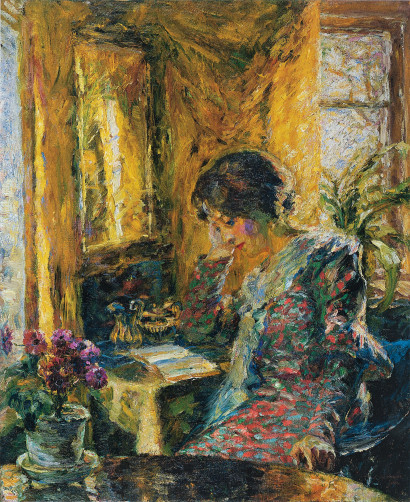
A woman with brown hair and a spotted dress sits in a bright room, resting her head on her right hand and reading thoughtfully from a book.
Emil Nolde, "Springtime in the Room", painting 1904
© Nolde Stiftung Seebüll
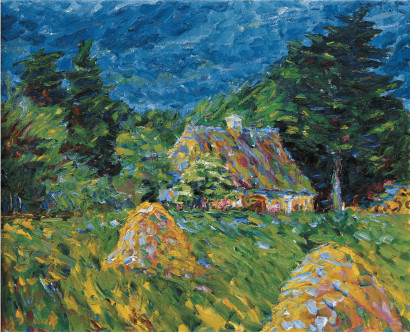
Thatched house with chimney in front of woodland, two haystacks in the foreground on a green meadow; dominant colours are green, blue and yellow.
Emil Nolde, "House by the Wood", painting 1908
© Nolde Stiftung Seebüll
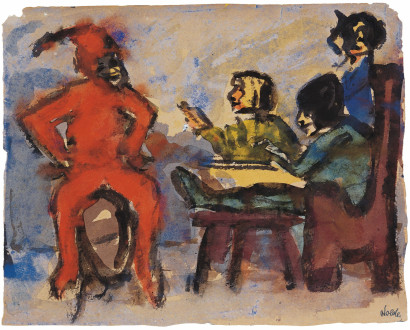
Four people sit on brown seats in front of a light background. On the left a figure in red, on the right figures in yellow, green and blue, seen from the side.
Emil Nolde, Auerbach's Basement (Bassermann as Mephisto), watercolour 1910/11
© Nolde Stiftung Seebüll
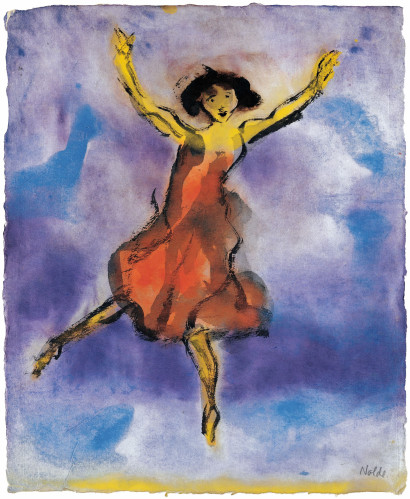
A woman in a red dress leaps in a dancing motion with outstretched arms and legs against a blue-violet background.
Emil Nolde, Female Dancer (Red Dress), watercolour 1910/11
© Nolde Stiftung Seebüll
Dancing couple in the foreground: a woman in a light green dress with a large feathered hat and a man in a black tailcoat, both with outstretched arms. In the background, further dancing couples against a vivid yellow-orange backdrop.
Emil Nolde, "Dance II", painting 1911
© Nolde Stiftung Seebüll
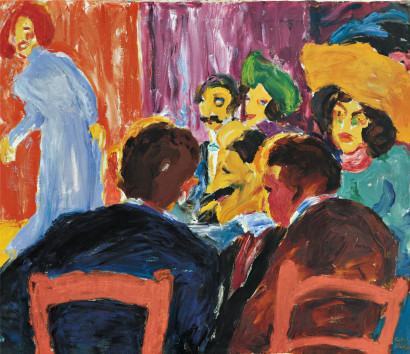
Men in suits and women in dresses with hats sit on chairs and collectively look towards a woman with red hair and a blue dress, who appears as if on a stage.
Emil Nolde, "Cabaret Audience", painting 1911
© Nolde Stiftung Seebüll
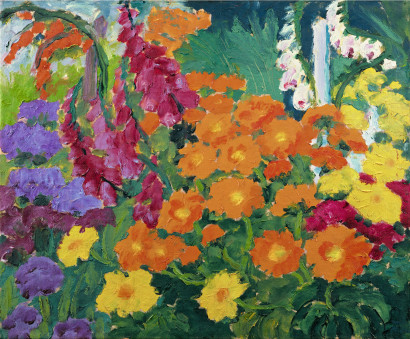
Colourful flowers in varying heights and shades – purple, pink, yellow, orange, white and red – set against a green background, with a small light blue section in the upper left corner.
Emil Nolde, "Flower Garden (Marigolds)", painting 1919
© Nolde Stiftung Seebüll
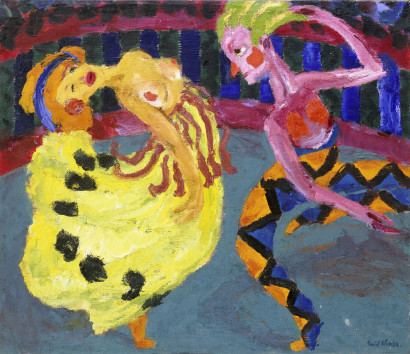
Two figures in a circus ring: a woman in a yellow skirt and a man in blue-orange trousers with colourful hair appear to be dancing wildly and gesturing.
Emil Nolde, "Dancer and Harlequin", painting 1920
© Nolde Stiftung Seebüll
Two colourful parrots on branches – the left one red, green and blue, the right one white and yellow – set against a light yellow-blue background.
Emil Nolde, Two Parrots, watercolour 1923/24
© Nolde Stiftung Seebüll
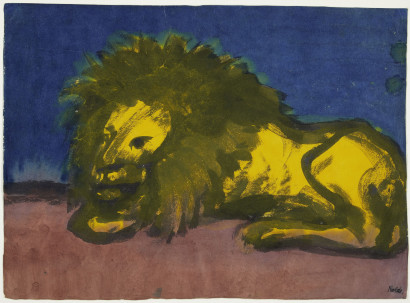
A yellow lion lies on brown ground in front of a strong blue background.
Emil Nolde, Lion Reclining, watercolour
© Nolde Stiftung Seebüll